
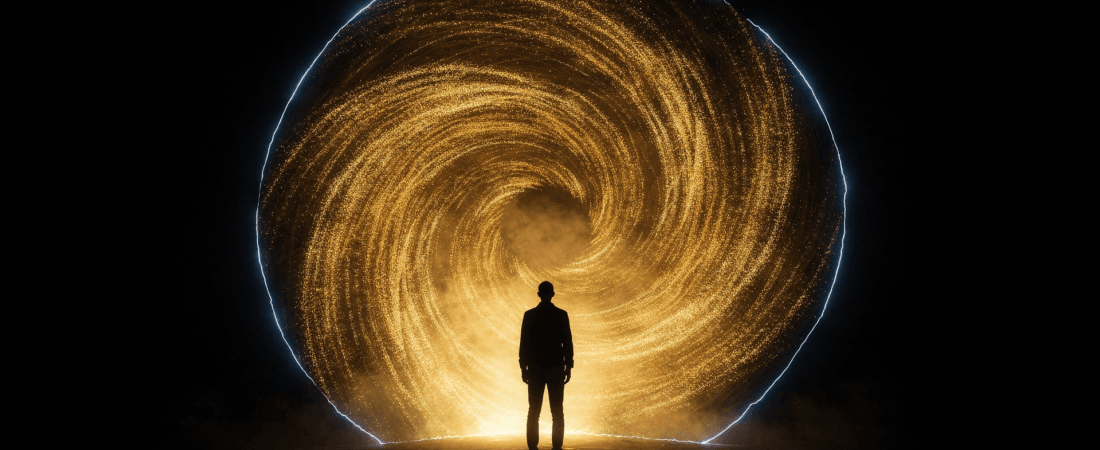
Near-death experiences are among the most fascinating, most studied, and most misunderstood events in human life. A heart stops. A body lies still on a hospital bed. And yet, when the person is brought back, they describe floating above the room, moving toward a brilliant light, meeting loved ones who died years ago, or watching their entire life replay in a single moment. Then they spend the rest of their lives trying to explain something they say words cannot hold.
For about 50 years, cardiologists, neuroscientists, psychiatrists, and spiritual seekers have tried to answer the same question: what is actually happening in those moments? Is it the last fireworks of a dying brain, or a glimpse of something beyond it?
At Code of Ascension, we are not here to force a conclusion on you. We are here to give you the full picture: what people report, how often, what the strongest studies found, how scientists explain it, why some researchers think the brain alone cannot explain it, and what all of it means for how you live. This deep dive builds on our hub guide, What Happens After Death?, and goes much further into the experience itself. 🕯️
Quick Answer: What Is a Near-Death Experience?
Quick Answer: A near-death experience (NDE) is a vivid, deeply meaningful experience reported by some people who come close to death or are clinically dead and then revived. Common features include leaving the body, overwhelming peace, a tunnel or light, meeting deceased loved ones, a life review, and a border that marks the point of no return. Roughly 10% to 20% of cardiac arrest survivors report one in hospital studies. Science has linked NDEs to brain chemistry, oxygen and carbon dioxide changes, and REM sleep mechanisms, but no single explanation accounts for everything people describe, and what NDEs mean about consciousness is still debated.
What this article can and cannot establish: NDE research can document experiences, recurring patterns, physiological conditions, memory reports, and aftereffects. It cannot currently prove what consciousness is, whether awareness can exist independently of the brain, or what happens after death. Throughout this guide, we keep three things separate: what people report, what has been measured, and what remains interpretation.
The COA Near-Death Experience Element Map
Near-death experiences tend to be built from the same ten elements. This Code of Ascension framework compares what experiencers report, how often selected features appeared in one major prospective study, and the leading scientific and spiritual interpretations of each. It places interpretations side by side; it does not rank them as facts.
| Element | How often* | Leading scientific hypothesis | What experiencers often say it meant |
|---|---|---|---|
| 1. Peace and positive emotion | 56% | Endorphins and stress chemistry | The most loving, calm state they have ever known |
| 2. Awareness of being dead | 50% | Self-monitoring as the brain registers crisis | A calm realization rather than panic |
| 3. Meeting deceased persons | 32% | Memory and expectation activated near death | Reunion, welcome, or being sent back |
| 4. Tunnel or passage | 31% | Oxygen loss affecting the visual system | Transition from one state to another |
| 5. Unearthly landscape | 29% | Dream-like (REM) imagery | A realm more real than ordinary life |
| 6. Out-of-body experience | 24% | Disrupted body mapping near the angular gyrus | Awareness continuing outside the body |
| 7. Communication with a light | 23% | Gamma surge or neurochemical release | Contact with a loving presence or Source |
| 8. Vivid colors | 23% | Heightened visual cortex activity | Colors that do not exist on Earth |
| 9. Life review | 13% | Rapid memory retrieval under extreme stress | Feeling the impact of how they treated others |
| 10. A border | 8% | Unclear | A point of no return, and a choice to come back |
“Science can describe the parts of a near-death experience. Only the person who lived it can tell you what it weighed.”
*Share of the 62 patients with an NDE in van Lommel et al., The Lancet, 2001 (344 cardiac arrest survivors). Scientific and spiritual interpretations are both hypotheses, not settled answers. On the COA Afterlife Evidence Ladder, NDEs sit on the Reported and Investigated rungs.
Cite this map: Code of Ascension, “The COA Near-Death Experience Element Map,” codeofascension.com/near-death-experiences/
What Is a Near-Death Experience?
The phrase “near-death experience” entered popular language in 1975, when psychiatrist and philosopher Raymond Moody published Life After Life, a collection of accounts from people who had been revived after being declared clinically dead or coming very close to death. The book became a worldwide bestseller, and it gave millions of people a name for something they had experienced but never dared to talk about.
The experience itself is far older than the name. In Plato’s Republic, written around 375 BCE, a soldier named Er is killed in battle, lies among the dead for days, and wakes on his funeral pyre to describe a journey through the afterlife and the judgment of souls. Around 1500, the painter Hieronymus Bosch created Ascent of the Blessed, a panel showing souls rising through a long tunnel toward a radiant light, so close to modern NDE descriptions that it is often reproduced in books on the subject.
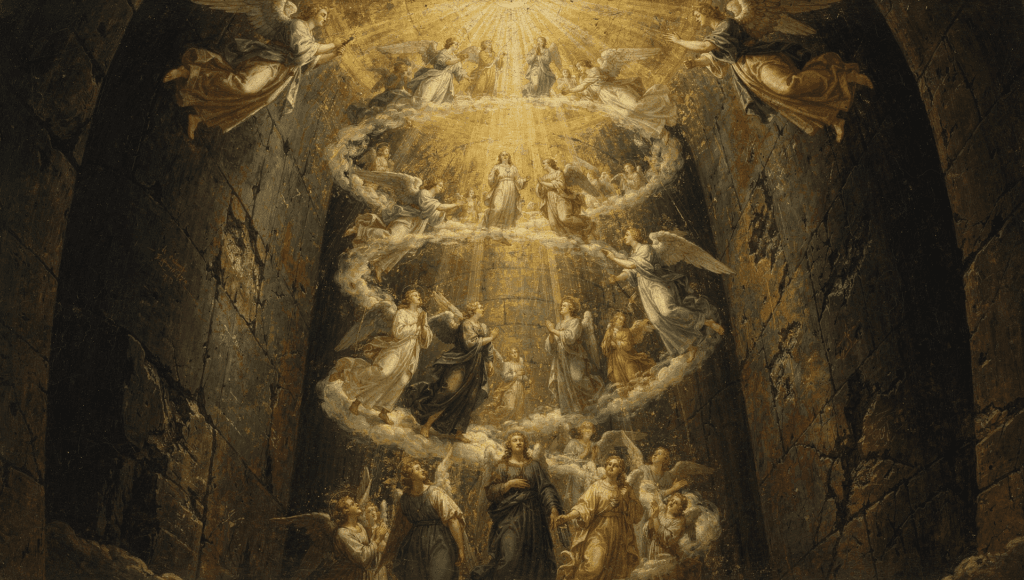
To study NDEs scientifically, researchers needed a way to tell a true near-death experience apart from a confused memory or a dream. In 1983, psychiatrist Bruce Greyson at the University of Virginia published the Greyson NDE Scale, a 16-question measure covering four areas:
- Cognitive: time slowing down, thoughts speeding up, a life review, sudden understanding
- Affective: peace, joy, a sense of cosmic unity, an encounter with light
- Paranormal: vivid senses, apparent awareness of distant events, seeing the future, leaving the body
- Transcendental: an unearthly realm, a mystical presence, deceased spirits, a border or point of no return
A score of 7 or higher (out of 32) is the standard threshold for an NDE. That scale is still the most widely used tool in the field, which means that when studies give you a percentage, they are usually measuring the same thing.
How Common Are Near-Death Experiences?
The honest answer depends on who you ask and how you ask. Here is what the strongest studies show:
- The Dutch prospective study (2001). Cardiologist Pim van Lommel and colleagues followed 344 cardiac arrest survivors across 10 Dutch hospitals and published the results in The Lancet. Sixty-two patients (about 18%) reported an NDE, and 41 (about 12%) had a deep or “core” experience.
- The Slovenian carbon dioxide study (2010). Of 52 patients revived after out-of-hospital cardiac arrest, 11 (about 21%) reported an NDE.
- AWARE I (2014). This large international study led by Dr. Sam Parnia recorded 2,060 cardiac arrests. Among the survivors who could be interviewed in depth, about 9% described an NDE and about 2% described explicit recall of events during resuscitation, with one case judged verifiable. Many more reported fragmented memories of fear, light, animals, or family.
- AWARE II (2023). Of 567 in-hospital cardiac arrests, 53 people survived and 28 completed interviews. Eleven reported memories or perceptions suggesting some form of awareness, and six described what researchers called a recalled experience of death.
- The general population. A 2019 crowdsourced study published in PeerJ surveyed 1,034 people across 35 countries and found that about 10% reported an experience scoring 7 or higher on the Greyson scale.
Put simply: most people who come close to death do not remember an NDE, but a meaningful minority do, consistently, across countries, ages, and belief systems. That consistency is what keeps researchers coming back to the subject.
The Most Common Elements of a Near-Death Experience
No two NDEs are identical, and almost no one experiences every element. But the same building blocks show up again and again. In van Lommel’s Lancet study, here is how often each element appeared among the 62 patients who had an NDE:
- Positive emotions: 56%
- Awareness of being dead: 50%
- Meeting deceased persons: 32%
- Moving through a tunnel: 31%
- Observing a celestial landscape: 29%
- Out-of-body experience: 24%
- Communication with a light: 23%
- Observing colors: 23%
- Life review: 13%
- Presence of a border: 8%
Peace and the End of Pain
The single most reported feature is not a tunnel or a light. It is peace. People describe a sudden absence of pain, fear, and heaviness, often in the middle of a medical emergency that should have been terrifying. Many say it was the most loving and calm state they have ever known, and that ordinary language makes it sound smaller than it was.
Knowing You Have Died
Half of van Lommel’s NDE group reported a clear awareness that they had died. Experiencers often describe this without panic, more like a calm realization: “Oh. So this is what it is.”
The Tunnel and the Light
The tunnel is the image everyone knows, but experiencers describe it in many ways: a dark passage, a vortex, a valley, a staircase, or simply rapid movement through darkness toward light. The light itself is usually described as brighter than anything on Earth yet not painful to look at, and frequently as alive, intelligent, or loving. Some people call it God, some call it Source, some refuse to name it at all.
Meeting Loved Ones
About a third of van Lommel’s NDE patients met deceased people, usually relatives or friends. A striking detail reported across the literature is that experiencers sometimes describe meeting a person they did not know had died, which researchers sometimes call “Peak in Darien” cases. These accounts are compelling, but they are rare and hard to verify, so they belong in the “reported and investigated” category rather than proof.
If you are grieving and hoping for contact, our guide to signs from deceased loved ones explores the experiences people report long after a death, not just at the edge of it.
Unearthly Landscapes and Colors
Many describe gardens, meadows, cities of light, or colors that do not exist in normal life. People often say the colors were “more real than real,” a phrase that shows up so frequently in NDE accounts that researchers note it as a pattern in its own right.
The Border
A small but important group describes reaching a boundary: a river, a fence, a door, a line of light. They sense, or are told, that crossing it would mean not coming back. Many report being sent back (“it’s not your time”) or choosing to return for children, partners, or unfinished purpose.
The Life Review: Seeing Your Life All at Once
Of all NDE features, the life review may be the most transformative. Experiencers describe seeing their entire life, sometimes in sequence and sometimes all at once, with perfect clarity. Many say they did not just watch it. They felt it, including the emotional impact their actions had on other people.
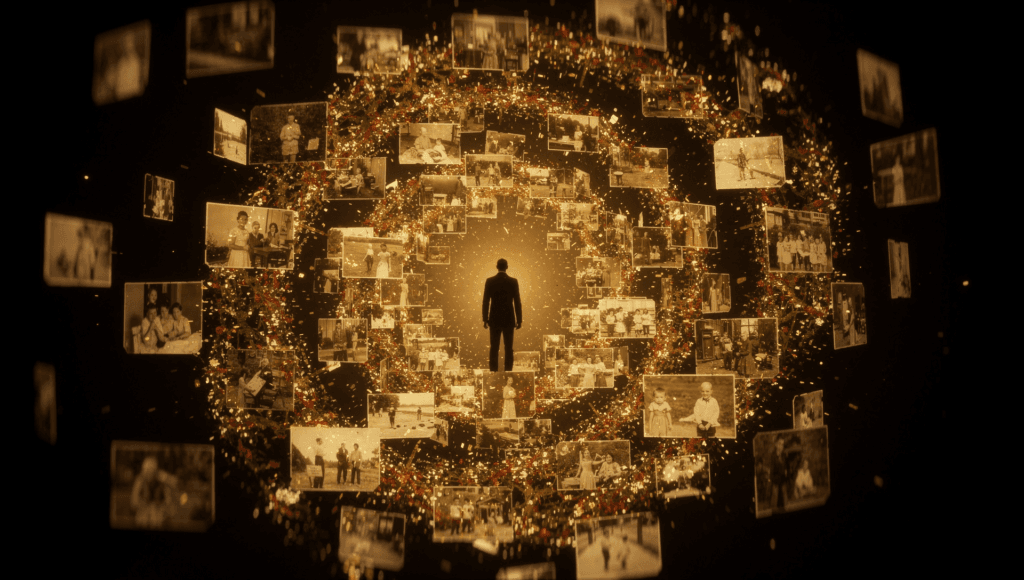
People frequently describe the review as non-judgmental. There is no angry judge. There is understanding, and sometimes deep regret, followed by the sense that what mattered most was how much they loved and how they treated others. Accomplishments, money, and status rarely feature at all.
This is where NDEs echo ancient wisdom in a powerful way. In ancient Egypt, the heart was weighed against the feather of Ma’at in the Hall of Two Truths, and the deceased declared how they had lived. You can explore that tradition in our deep dive on the Weighing of the Heart. Thousands of years apart, both traditions point to the same idea: at the end, the question is not what you owned, but what your life carried.
Out-of-Body Experiences: The Most Debated Part
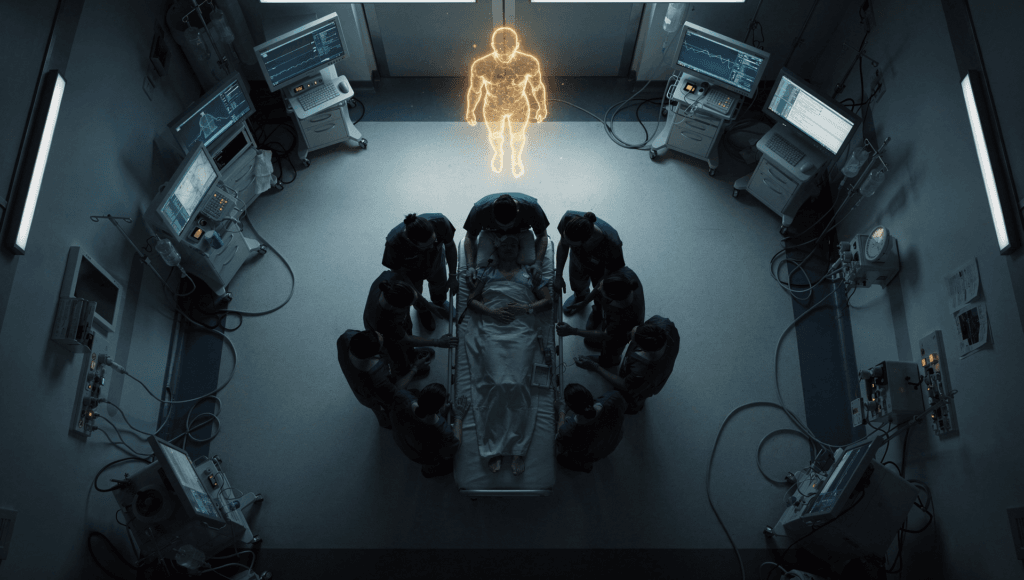
About a quarter of NDE experiencers in van Lommel’s study described leaving their body, often watching the resuscitation from above, near the ceiling. This is the part of the NDE that researchers can actually try to test, which makes it the center of the scientific debate.
The Famous Cases
The most famous, and most disputed, case report is that of Pam Reynolds, a singer from Atlanta who underwent brain surgery in 1991 using a procedure called “standstill,” in which her body was cooled and blood was drained from her head. She later described parts of the surgery, including a bone saw and a conversation in the room. Cardiologist Michael Sabom documented the case in his 1998 book Light and Death. It is historically influential, but it is a single retrospective case report, not a controlled study. Supporters see it as one of the most compelling NDE accounts on record. Skeptics argue her descriptions could have come from moments of anesthetic awareness before or after the deepest phase of the operation. Its timing and interpretation remain debated, and it should not be weighed as equal to the controlled hospital studies below.
Testing It in Hospitals
The AWARE studies were designed to test out-of-body claims directly. In AWARE I, researchers placed images on high shelves visible only from above. One patient gave a detailed account of his resuscitation, including sounds from an automated defibrillator, that researchers were able to check against what actually happened. It is an intriguing case, but it is a single case, his cardiac arrest happened in an area without a shelf image, and it does not prove that consciousness can exist independently of the brain.
In AWARE II, researchers used a tablet showing hidden images and played audio cues through headphones during resuscitation. No one identified the image, and only 1 of the 28 interviewed survivors identified the audio cue. The researchers also recorded EEG patterns associated with conscious processing in some patients during CPR, in some cases up to an hour into resuscitation. The study documents reported memories and brain activity; it does not verify perception from outside the body.
Near-Death Experiences in the Blind
In 1997, researchers Kenneth Ring and Sharon Cooper interviewed 31 blind and visually impaired people who reported NDEs or out-of-body experiences. Most reported some form of visual impressions during the experience, including some who had been blind from birth. This is interview-based testimony, not experimentally verified perception. Critics note that the descriptions were often hard to verify and that blind people do build rich spatial imagery from other senses. Still, the study raised a question that has never fully gone away.
How to hold this: Out-of-body accounts are real reports, and a few are striking. But controlled hospital tests have not yet produced a clear, repeatable confirmation of seeing from outside the body. On our Afterlife Evidence Ladder, they sit on the Reported and Investigated rungs.
Distressing Near-Death Experiences
Not every NDE is peaceful, and it matters to talk about this honestly. Some people go through a frightening experience, and they often feel ashamed or alone because the popular image of NDEs is all light and love.
A 2019 study published in the journal Memory analyzed 123 NDE accounts and found that about 14% were distressing. Earlier studies had estimated anywhere from 1% to 20%. Researchers, building on work by Bruce Greyson and Nancy Evans Bush, describe three main types:
- Inverse experiences: the classic features are there (leaving the body, a light, a tunnel) but they feel threatening or out of control
- Hellish experiences: frightening imagery, threatening presences, or intense distress
- Void experiences: an overwhelming sense of nothingness, isolation, or nonexistence
A distressing NDE is not a verdict on someone’s worth or a sign that they did something wrong. Researchers stress that these experiences happen to all kinds of people, and many experiencers eventually find meaning in them after real support and time. If you or someone you love is carrying a frightening experience, talking to a counselor familiar with NDEs or connecting with an experiencer support group can help enormously.
Near-Death Experiences Across Cultures and History
If NDEs were simply invented by modern Western culture, we would not expect to find them in such different times and places. But we do, and the details shift in revealing ways.
- Ancient Greece: Plato’s Myth of Er describes a soldier’s journey through the afterlife and his return to tell of it.
- Tibetan Buddhism: the Bardo Thodol, often called the Tibetan Book of the Dead, describes the luminous states and visions of the in-between period after death. Tibet also has a tradition of delok, people said to have died, traveled through other realms, and returned.
- India: researchers including Karlis Osis, Erlendur Haraldsson, and Satwant Pasricha documented accounts in which experiencers described messengers of Yama, the lord of death, sometimes with the striking detail that the “wrong person” had been taken and was being sent back.
- Ancient Egypt: the soul’s journey through the Duat, the judgment of the heart, and the return to light form one of the oldest recorded maps of the afterlife.
- Modern accounts worldwide: large online collections such as the Near Death Experience Research Foundation now hold thousands of accounts from dozens of countries.

Researchers notice a clear pattern: certain themes (leaving the body, peace, a boundary, meeting others, returning) recur widely, while the content and its interpretation vary by culture. A Christian may meet Jesus, a Hindu may meet Yama’s messengers, and a nonreligious person may describe simply “a being of light.” Skeptics see this as evidence that the brain builds the experience from what it already knows. Others see it as one experience translated into many languages. Researchers also note that the wording of NDE questionnaires can itself shape which features people report, so cross-cultural comparisons need care.
What Science Says: Brain-Based Explanations
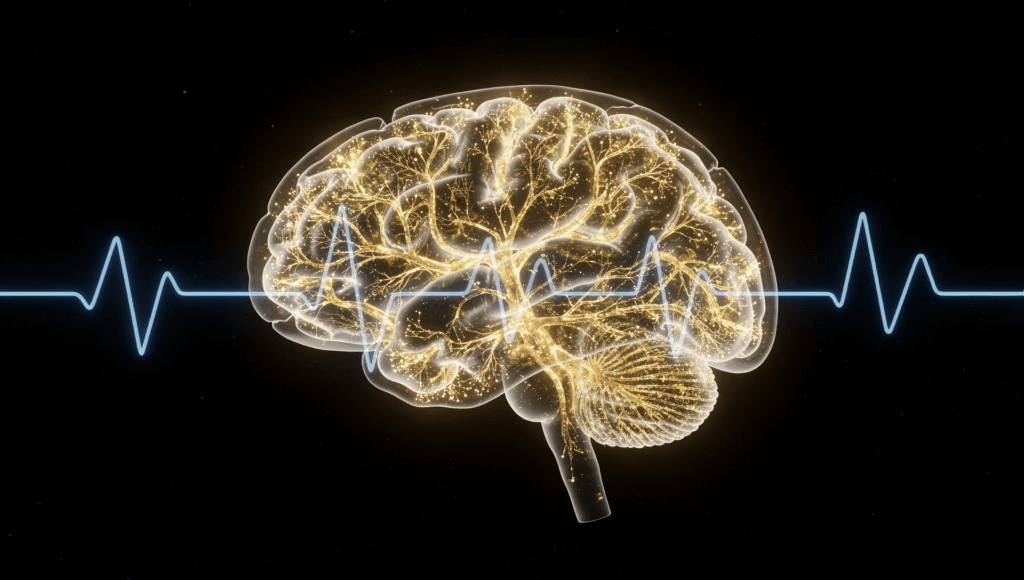
Science has offered several serious explanations for near-death experiences. There is no single, settled mechanism: the current literature supports several plausible contributors, each of which explains part of the picture, and no one model accounts for every reported feature.
Oxygen and Carbon Dioxide
When the heart stops, the brain loses oxygen and carbon dioxide builds up. Both can change perception. In the 2010 Slovenian study published in Critical Care, patients who reported NDEs had significantly higher carbon dioxide levels in their blood than those who did not. Critics point out that NDEs also happen in situations where oxygen and carbon dioxide levels are normal, so this is likely one factor, not the whole story.
A Surge of Brain Activity
In 2013, Dr. Jimo Borjigin’s team at the University of Michigan found that rats showed a burst of highly organized, high-frequency gamma activity in the seconds after cardiac arrest. In 2023, the same team reported a similar surge in two of four dying patients removed from life support, published in PNAS. The activity appeared in brain regions linked to conscious processing. It is a fascinating finding, but it involved very few patients, and brain activity is not the same as proof of an experience.
REM Sleep Intrusion
REM sleep is the dream stage of sleep. Sometimes its features bleed into waking life, causing things like sleep paralysis and vivid hallucinations as you fall asleep or wake up. The 2019 PeerJ study found that people with a history of REM intrusion were nearly three times more likely to report an NDE. Neurologist Kevin Nelson has argued for years that the REM system helps explain NDE features like light, paralysis, and dreamlike imagery.
The Out-of-Body Brain Region
In 2002, neurologist Olaf Blanke and colleagues reported in Nature that electrically stimulating a specific spot in a patient’s brain, near the right angular gyrus, repeatedly produced the sensation of floating above her body. This showed that the brain can generate out-of-body feelings, though it does not prove that every out-of-body experience is generated that way.
Brain Chemistry and DMT
Under extreme stress, the body releases powerful chemicals, including endorphins. Researchers have also explored compounds like DMT, a psychedelic found in trace amounts in many plants and animals. In a 2018 placebo-controlled study at Imperial College London, all 13 healthy volunteers who received DMT scored above the NDE threshold on the Greyson scale, with experiences comparable in many ways to real NDEs. The overlap is striking, but the context is very different: those volunteers were never close to death. If you are curious about the spiritual side of this conversation, our guide to pineal gland activation explores the symbolism and the science.
The Missing Piece
Here is the challenge every explanation faces: during cardiac arrest, the brain is in severe crisis, and yet NDEs are often described as clearer, more structured, and more real than ordinary waking life. They are remembered in detail for decades, unlike most dreams or hallucinations. Scientists are still working out how a brain under that much stress could produce such organized experiences.
The Case for Consciousness Beyond the Brain
Some respected researchers argue that brain-based explanations are not enough. Pim van Lommel, the cardiologist behind the Lancet study, noted that his team could not find a medical factor, such as medication, the length of unconsciousness, or fear of death, that predicted who had an NDE. In the authors’ interpretation, if NDEs were caused purely by physiological factors such as oxygen loss, far more patients should have had them. That is their reading of the data, not a scientific consensus; critics point out that the factors involved are hard to measure precisely during a cardiac arrest.
This leads to what philosophers call the filter view of consciousness: the idea that the brain may filter or receive awareness rather than produce it, the way a radio receives a broadcast. William James explored this idea in 1898. Researchers like van Lommel, Greyson, and Parnia have kept it on the table, pointing to NDEs, terminal lucidity, and the unsolved “hard problem” of why physical processes produce experience at all.
It is important to label this clearly: the filter view is a philosophical and spiritual hypothesis, not an established scientific finding. Most neuroscientists still hold that consciousness is produced by the brain. But science has not explained why there is experience in the first place, and as long as that remains open, the question of whether awareness can exist beyond the body remains open too.
In 2022, a multidisciplinary team led by Parnia published a consensus statement in the Annals of the New York Academy of Sciences proposing standards for studying what they called recalled experiences of death. They concluded that these experiences are not consistent with typical hallucinations, illusions, or psychedelic experiences, and called for rigorous research without prejudice in either direction. That is about as balanced as the field gets.
How Near-Death Experiences Change People
Whatever NDEs are, their effects on people are real and lasting. This may be the most consistent finding in the entire field.
Van Lommel’s team followed patients at two years and again at eight years. Compared with survivors who did not have an NDE, those who did showed:
- Much less fear of death
- More empathy and compassion for others
- Greater appreciation of ordinary life
- More involvement with family
- More interest in the meaning and purpose of life
- Less interest in status and material success
Interestingly, the changes grew stronger over time rather than fading. Many experiencers also report increased intuition, sensitivity to light and sound, and a stronger spiritual life that does not always fit inside religion.
But the aftermath is not always easy. Experiencers can feel isolated, misunderstood, or homesick for what they felt. Some struggle with relationships, careers, or faith communities that no longer feel aligned. Some partners and families find the changes confusing. Integration takes time, and it is easier with support.
If You Had a Near-Death Experience: A Gentle Integration Guide
If you have had an NDE, or something like one, you are not alone and you are not losing your mind. Here are some steps that experiencers and researchers often recommend:
- Write it down while it is still vivid. Record every detail you remember, without editing or explaining it away. Your future self will thank you.
- Ground your body first. A near-death event is also a physical trauma. Gentle breathing, rest, nature, and simple nervous system resets help your system feel safe again.
- Choose carefully who you tell. Start with one or two people you trust. Not everyone will understand, and that is not a reflection on your experience.
- Find other experiencers. Support groups and organizations for NDE experiencers exist around the world, and being heard by people who understand can be deeply healing.
- Talk to a professional if it is distressing. A counselor who respects spiritual experiences can help you process fear, grief, or disorientation without dismissing what happened.
- Let the meaning unfold slowly. Many experiencers say it took years to understand what their NDE meant for their life. You do not have to figure it all out now.
- Live the lessons. The most common message experiencers bring back is simple: love more, fear less, and treat people well. You can start there.
If your nervous system feels stuck in overdrive after a medical crisis or a powerful spiritual experience, our Nervous System Calm Pack offers simple daily practices for returning to safety in your body.
How to Support Someone Who Had a Near-Death Experience
If someone you love tells you about an NDE, your response matters more than you might think.
- Listen without debating. You do not need to agree or disagree with their interpretation. Just let them tell it.
- Do not rush to explain it away. Saying “it was just the drugs” can make someone feel dismissed and less likely to share again.
- Ask open questions. “What was that like for you?” goes much further than “Did you really see that?”
- Be patient with changes. Shifts in priorities, beliefs, or relationships are common. Give them space to become who they are becoming.
- Watch for distress. If the experience was frightening or they seem stuck, gently encourage support.
Near-Death Experiences on the Afterlife Evidence Ladder
Using the COA Afterlife Evidence Ladder, here is how the pieces of the NDE puzzle fit together:
- Measured: cardiac arrest, oxygen and carbon dioxide changes, surges of brain activity near death
- Reported: the experiences themselves, their common elements, and their lasting aftereffects
- Investigated: out-of-body accuracy tests, cases like Pam Reynolds, and studies of NDEs in the blind
- Taught: what traditions say these experiences reveal, from the Myth of Er to the Tibetan bardo and the Egyptian Duat
- Lived: what an NDE means to the person who had it, and what it can mean to you
Near-death experiences do not prove what happens after death. But they show something remarkable: in the moment many people fear most, a significant number of human beings report peace, love, light, and meaning, and come back changed for the better. Whatever the final answer turns out to be, that is worth sitting with.
If this topic opened something in you, our free field guide, You Are More Than The Body, from the Free Ascension Library, was made for exactly this kind of moment. And if you want to keep exploring the bigger journey of awakening, start with What Is Spiritual Ascension? ✨
Sources: van Lommel et al., “Near-death experience in survivors of cardiac arrest: a prospective study in the Netherlands”, The Lancet, 2001; Greyson, “The Near-Death Experience Scale: Construction, Reliability, and Validity”, Journal of Nervous and Mental Disease, 1983; Parnia et al., “AWARE: AWAreness during REsuscitation”, Resuscitation, 2014; Parnia et al., “AWAreness during REsuscitation – II”, Resuscitation, 2023; Parnia et al., “Guidelines and standards for the study of death and recalled experiences of death”, Annals of the New York Academy of Sciences, 2022; Klemenc-Ketis et al., “The effect of carbon dioxide on near-death experiences in out-of-hospital cardiac arrest survivors”, Critical Care, 2010; Kondziella et al., “Prevalence of near-death experiences in people with and without REM sleep intrusion”, PeerJ, 2019; Cassol et al., “A systematic analysis of distressing near-death experience accounts”, Memory, 2019; Xu, Borjigin et al., “Surge of neurophysiological coupling and connectivity of gamma oscillations in the dying human brain”, PNAS, 2023; Blanke et al., “Stimulating illusory own-body perceptions,” Nature, 2002; Timmermann et al., “DMT Models the Near-Death Experience”, Frontiers in Psychology, 2018; Ring & Cooper, “Near-Death and Out-of-Body Experiences in the Blind”, Journal of Near-Death Studies, 1997; Raymond Moody, Life After Life (1975); Michael Sabom, Light and Death (1998).
FAQ
What is a near-death experience?
A near-death experience is a vivid, meaningful experience reported by some people who come close to death or are clinically dead and then revived. Common features include leaving the body, deep peace, a tunnel or light, meeting deceased loved ones, a life review, and a border or point of no return.
How common are near-death experiences?
Hospital studies suggest that roughly 10% to 20% of cardiac arrest survivors report an NDE. In the landmark 2001 Dutch study published in The Lancet, about 18% of 344 survivors reported one. A 2019 survey across 35 countries found that about 10% of the general public reported an NDE-type experience.
Do near-death experiences prove life after death?
No. NDEs are real, well-documented experiences, but they do not prove that consciousness survives death. Some researchers see them as evidence that awareness may not depend entirely on the brain, while most neuroscientists explain them through brain activity under extreme stress. The question remains open.
What do people see during a near-death experience?
People most often report a sense of peace, awareness of being dead, deceased relatives or friends, a tunnel or passage, a brilliant and loving light, beautiful landscapes, vivid colors, a life review, and a boundary they are not allowed or choose not to cross.
Are all near-death experiences positive?
No. Studies suggest that somewhere between 1% and 20% of NDEs are distressing, with a 2019 study finding about 14%. These can involve frightening imagery, a sense of void or nothingness, or classic features that feel threatening. A distressing NDE is not a judgment on the person, and support can help.
What causes near-death experiences according to science?
Scientists have linked NDEs to oxygen loss and carbon dioxide buildup, surges of organized brain activity near death, REM sleep intrusion, stimulation of specific brain regions, and brain chemicals released under stress. Each explanation accounts for part of the experience, but none fully explains all of it.
Can you have a near-death experience without almost dying?
Yes. Similar experiences have been reported during fainting, severe illness, intense fear, deep meditation, and with certain substances such as DMT. Researchers often call these NDE-like experiences, and they can share many of the same features as NDEs that happen close to death.
How do near-death experiences change people?
Long-term studies show that experiencers often have far less fear of death, more compassion, greater appreciation for life, stronger family bonds, and more interest in meaning and purpose. In the Dutch study, these changes grew stronger over eight years. Some experiencers also face challenges integrating the experience.
About The Author
Author: King | Founder of Code of Ascension
King is the founder of Code of Ascension, a spiritual education platform focused on consciousness, symbolism, manifestation, nervous system awareness, and hidden patterns of reality. Through Code of Ascension, he explores ancient wisdom and modern insights to help others awaken, align, and ascend.
Keep Ascending 🚀