

The hiccups spiritual meaning starts with one small, sudden thing: your breath catches. One moment you are talking, eating or drifting off to sleep, and the next your body jolts and a little “hic” escapes. People have been talking about that catch since at least Plato’s time. The best known hiccups superstition says someone is thinking of you or talking about you. Another old idea says you have taken in too much, too fast. Both point to the same place. A hiccup is an interrupted breath, and in several old languages the word for breath is also the word for spirit.
Quick Answer: in folklore, the most common hiccups spiritual meaning is that someone is thinking of you, missing you or talking about you. Families and cultures disagree on whether those thoughts are loving or critical. At Code of Ascension, we read hiccups as an interrupted breath: a pause button pressed by your own body that calls you back to a steady rhythm and asks who or what is pulling at your attention right now.
At Code of Ascension, we read body signs as symbolic mirrors: small moments that ask you to pause and notice what your energy is already doing. So the deeper question is not only “What do hiccups mean spiritually?” It is “What is catching my breath, and where do I need to slow down and listen?”
Hiccups Spiritual Meaning: The Fast Answer
Here is the hiccups spiritual meaning in brief, by the situations people search for most.
- Someone is thinking of you or talking about you: the classic hiccups superstition, read as love in some families, criticism or gossip in others.
- You took in too much, too fast: too much food, too much news, too much feeling. The breath stalls so you can catch up.
- Hiccups at night: your thoughts are still running when your body is ready to rest.
- Hiccups while eating: a cue to slow down and receive what is in front of you.
- Hiccups during prayer or meditation: energy shifting as you move from doing into stillness.
- A hiccup fit that will not stop: a strong, repeated call to return to breath and to put down something you have been carrying.
In folklore, the hiccups spiritual meaning is news about other people. At Code of Ascension, it is also a message about your own rhythm.
The Hiccup Is An Interrupted Breath
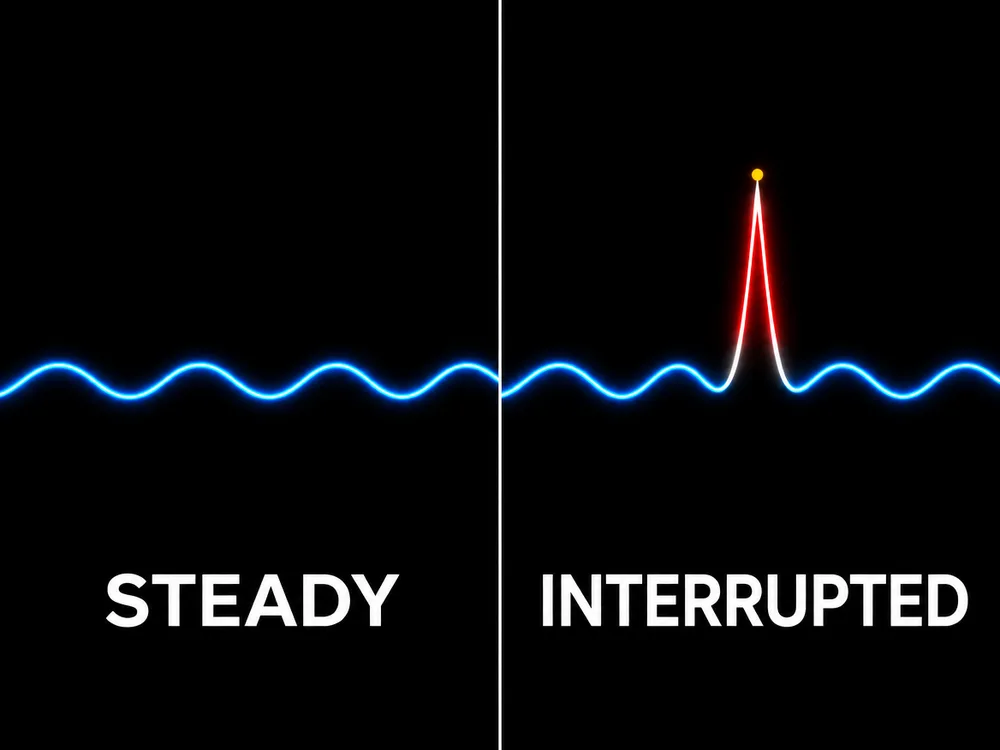
Most body signs ask you to notice something. A hiccup stops you mid sentence.
Mayo Clinic describes hiccups as “repeated spasms or sudden movements of the diaphragm that you can’t control,” the muscle that separates your chest from your abdomen, and explains that each spasm makes the vocal cords close suddenly, which is what makes the “hic” sound (Mayo Clinic: Hiccups). Even the English word copies that sound. The Online Etymology Dictionary calls “hiccup” a word “meant to imitate the sound produced by the convulsion of the diaphragm,” with earlier forms like “hicket” and “hyckock” (Etymonline: hiccup).
So a hiccup is, very literally, an in breath that gets cut off at the door. That is why the hiccups spiritual meaning lands on two themes: something reaching you from outside, as if a thought aimed at you has tugged on the line, and something you are taking in faster than you can settle. Folklore loves the first. Code of Ascension leans into the second. A good reading holds both.
Breath And Spirit: The Root Of The Hiccups Spiritual Meaning
To understand why a hiccup feels spiritual at all, go back to the words.
Across three of the great languages of the Western spiritual world, the word for spirit is also the word for breath. The Online Etymology Dictionary traces it to Latin spiritus, “a breathing (of respiration, also of the wind), breath,” a derivative of spirare, “to breathe,” and notes that the Latin word was used to translate Greek pneuma and Hebrew ruah (Etymonline: spirit).
When you “inspire” someone, you breathe into them. The language itself remembers a time when breath and spirit were one idea. Seen through that lens, the hiccups spiritual meaning becomes clearer: a hitch in your breath is a hitch in the movement of your spirit.
At Code of Ascension, we read that interruption as a doorway. Your breath is the most constant rhythm you have. When it stumbles, you are briefly, sharply present. That is the gift inside every hiccup.
Someone Is Thinking Of You: The Best Known Hiccups Spiritual Meaning
Ask almost anyone what hiccups mean, and you will hear: someone is thinking about you.
Folk archives show how personal this belief can be. The USC Folklore Archives record a belief, passed from an Indian friend’s mother to a student in Los Angeles, that “when you hiccup it means that somebody that loves you is thinking of you” (USC Folklore Archives: Love Hiccups). Another entry, from an Indian American family with strong ties to India, keeps it simple: “Having the hiccups means that someone is thinking about you” (USC Folklore Archives: Hiccups).
The tone changes from family to family. The Dartmouth Folklore Archive records a version from a family from Northern India, filed as a bad luck superstition and described as an extension of the evil eye, in which the thinking is not so warm: “If you have hiccups, it means that someone is thinking about you negatively” (Dartmouth Folklore Archive: Indian Superstition: Hiccups).
The idea travels well beyond India. Mental Floss describes a Russian version in which the hiccups point to someone who misses you, so that “when your hiccups disappear after a specific name, that person misses you.” It describes a Hungarian version with a sharper edge, where hiccups mean you are “being gossiped about, not missed” (Mental Floss: 7 Cures for Hiccups From World Folklore).
So when you search “hiccups someone is thinking of you,” folklore says yes, and then argues about the details. Loving thoughts, critical thoughts, longing, gossip: each family hands down its own version, and no single rule decides it.
At Code of Ascension, we read it this way. A hiccup is your body registering a tug on the line. Whether the tug is love, memory or judgment, the invitation is the same: notice who comes to mind, and notice how your body feels when they do.
When Someone Is Talking About You
The talking version is a close cousin of the thinking version. In the Hungarian reading above, the hiccup is the echo of your name in someone else’s mouth. The COA take: you cannot control the conversation happening in another room, but you can control the energy you bring into your own. Use the hiccup as a cue to come back to your own breath, your own name and your own center. If you often feel the weight of other people’s opinions in your body, our guide on How to Protect Your Energy Spiritually gives you practical ways to stay clear.
If the person who comes to mind is someone you have lost, the “someone is remembering you” belief can take on a tender meaning. Signs From Deceased Loved Ones explores those moments of closeness.
Hiccups Spiritual Meaning By Situation

When and where the hiccups start can sharpen the message. Here is the hiccups spiritual meaning by situation. The middle column shows what folklore and common sayings hold. The last column is the COA reading.
| Situation | Folklore and common sayings | COA reading |
|---|---|---|
| Any time, out of nowhere | Someone is thinking of you or talking about you | A tug on your attention: notice who comes to mind |
| At night | No separate night rule; the “thinking of you” belief still applies | Your mind is still running while your body wants rest |
| While eating | A common saying: you ate too fast | Slow down and receive what is in front of you |
| During prayer or meditation | Rarely covered in folklore | Energy shifting as you move into stillness |
| A fit that will not stop | Time for the folk cures: a fright, a held breath, sugar, a name | A strong call to return to breath and set something down |
Hiccups Spiritual Meaning At Night
The house is quiet, the lights are off, and then your breath jolts you back awake. If you hold the “thinking of you” belief, a night hiccup can feel like someone reaching for you at the end of their own day. At Code of Ascension, we read the hiccups spiritual meaning at night as a sign that your mind has not clocked out yet. Your body is ready for rest, but your thoughts are still replaying the day. The hiccup is the gap between the two showing itself.
Try this: when a night hiccup comes, put one hand on your belly and breathe slowly into it. Ask, “What am I still holding from today?” Name it, then let it sit on the nightstand until morning. If your nights also bring sudden waking in the small hours, Why You Wake Up at 3AM Spiritually explores that pattern in depth.
Hiccups While Eating
Hiccups at the table carry the clearest message: you are taking in a lot at once.
Spiritually, food is one of the most basic forms of receiving. When you eat quickly or distracted, you receive without being present for it. Put the fork down. Take a breath. Then ask what else you are swallowing whole: information, obligations, other people’s feelings. The hiccups spiritual meaning here is simple. Receive at a pace you can actually digest.
Hiccups During Prayer Or Meditation
You close your eyes, begin to breathe slowly, and your body hiccups. At Code of Ascension, we see this as a sign of transition: you are shifting from the speed of your day into stillness, and your breath is adjusting. A hiccup in that moment can be energy clearing, a small release before your rhythm settles. It is not a sign that you are doing it wrong.
Stay with it. Let each hiccup come and go without fighting it, and return to your slow breath after each one.
A Sudden Hiccup Fit That Will Not Stop
Sometimes the hiccups just keep coming. Folklore answers a long fit with its cures, from a sudden fright to saying names until one makes the hiccups stop.
At Code of Ascension, we read a stubborn hiccup fit as the strongest version of the same message: stop, breathe, and let go of something. It often shows up after a rush of excitement, stress or emotion. Your breath is trying to reset its own rhythm, and it keeps insisting until you pay attention. Treat it as an invitation to step out of the rush, sit down and give your breath your full care.
Hiccups Spiritual Meaning In History: Plato, Hippocrates And The Elves
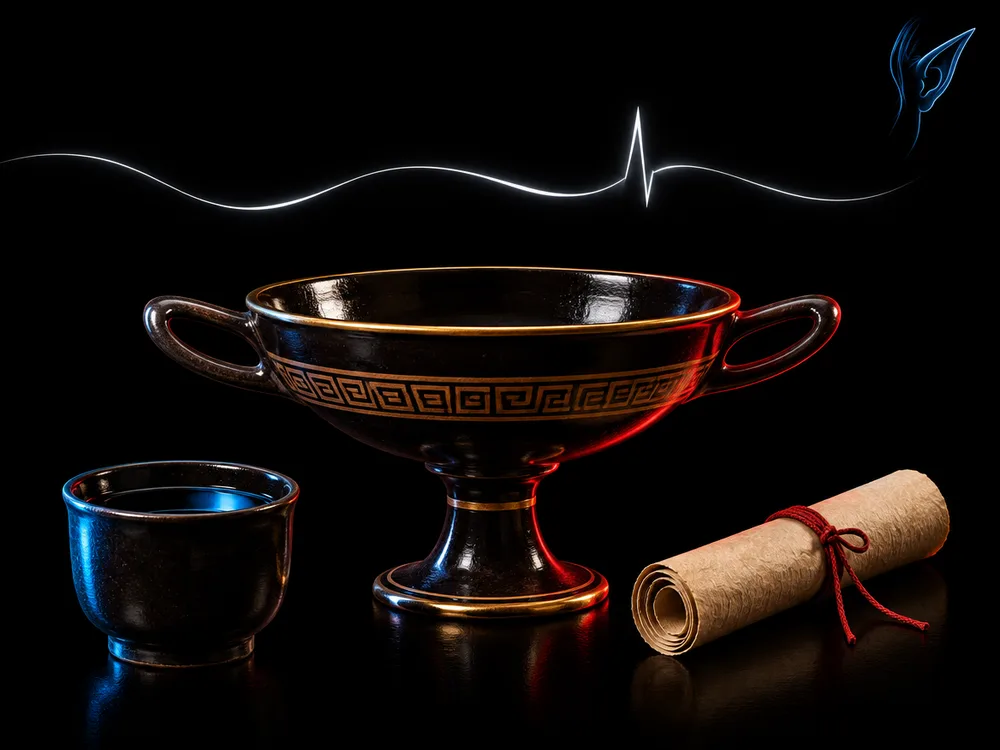
Hiccups have a surprisingly famous history, and one of the best scenes comes from Plato.
Plato’s Symposium. In Plato’s Symposium, a dinner party of Athenian friends takes turns giving speeches in praise of love. When it is the comic poet Aristophanes’ turn, he cannot speak. In Benjamin Jowett’s translation, he “had the hiccough, and was obliged to change turns with Eryximachus the physician.” Eryximachus, the doctor at the table, tells him to “hold your breath,” and if that fails to “gargle with a little water,” and if it still continues, to “tickle your nose with something and sneeze,” adding that “if you sneeze once or twice, even the most violent hiccough is sure to go.” When Aristophanes finally stands to speak, he reports that “the hiccough is gone; not, however, until I applied the sneezing,” and wonders “whether the harmony of the body has a love of such noises and ticklings” (Plato, Symposium, trans. Benjamin Jowett, Project Gutenberg). In the standard numbering of Plato’s text, the episode runs from 185c to 185e and is resolved at 188e to 189a, as a study in Durham University’s research repository sets out (Durham University: Aristophanes’ Hiccups and Pausanias’ Sophistry in Plato’s Symposium).
In a dialogue about love, the speech on love has to wait for a hiccup. Scholars still debate what Plato meant by it. For the hiccups spiritual meaning, it leaves an image worth keeping: the body interrupting the mind until the rhythm is restored.
Hippocrates. The Hippocratic Aphorisms also include the line, “Sneezing coming on, in the case of a person afflicted with hiccup, removes the hiccup” (Hippocrates, Aphorisms VI.13, trans. Francis Adams, MIT Internet Classics Archive). One sudden burst of breath answers another.
The elves of Old English. In early England, hiccups may have been tied to the unseen world. The Online Etymology Dictionary says an Old English word for hiccup was ælfsogoða, and that “hiccups were thought to be caused by elves” (Etymonline: hiccup). The scholar Alaric Hall adds an important nuance. He notes that the word “has puzzled lexicographers”: Clark Hall’s Old English dictionary glosses it as “hiccough (thought to have been caused by elves),” while the Dictionary of Old English reads it as a disease “thought to have been caused by supernatural agency” (Alaric Hall, “Calling the Shots,” Neuphilologische Mitteilungen, 2005). Hall’s own conclusion goes further: he argues the word did not mean hiccups at all, but a kind of internal pain in the torso, like the other Old English ailment words built on ælf. So the elf-hiccup link rests on the older dictionary glosses, and the scholarship now questions it. What survives either way is the old idea that something unseen could reach into the body.
At Plato’s table, a hiccup raised a question about the body’s harmony. For early English speakers, it may have been the touch of something unseen. For many families today, it is the touch of someone else’s thoughts. The details change. The instinct that a hiccup is more than a hiccup stays.
Old Hiccup Cures And The Hiccups Spiritual Meaning Behind Them
Folklore rarely leaves a sign without a remedy. Here are the classic hiccup cures, shared as the traditions practice them.
A fright. Someone sneaks up and startles you. The USC Folklore Archives record scaring the hiccups away alongside holding your breath in one family’s list of cures (USC Folklore Archives: Hiccup Cures). Spiritually, the fright works like a reset button: one shock to snap the rhythm back.
Holding your breath. Prescribed at Plato’s dinner table and still taught in families today, it speaks most directly to the hiccups spiritual meaning: you answer an interrupted breath with a held, intentional one.
Sugar. A spoonful of sugar, or sugar under the tongue. A Chinese informant in the USC Folklore Archives shares the advice: “just put some sugar under your tongue to get rid of them” (USC Folklore Archives: Hiccups Cure: Sugar Under the Tongue). In the COA reading, sweetness is a small act of self comfort, a way to soften whatever had you tense.
Naming the person thinking of you. In the Russian version described by Mental Floss, you say names until the hiccups stop, and the name that stops them belongs to the person who misses you. A hiccup fit becomes a way of remembering the people who hold you in mind.
Look at what these cures share. A shock, a held breath, a sweet taste, a name: each one interrupts the interruption. Each one brings your full attention back into the present. That is the heart of the hiccups spiritual meaning at Code of Ascension: the cure and the message are the same thing. Come back.
Hiccups Spiritual Meaning For Work, Money And Big Decisions

Hiccups and money do not appear together in the old superstitions, so this section is the COA reading, applied to real life.
If the deeper hiccups spiritual meaning is “you are taking in too much, too fast,” work and money are where it shows up most: a big pitch, a rushed decision, an offer that needs an answer by tonight.
If hiccups catch you in a busy work season, ask:
- Am I saying yes to more than I can digest right now?
- Is there a decision I am rushing because I feel pressured?
- Where would one slow breath change the quality of my choice?
The hiccup is a built in pause, and in money and career a pause is often the most valuable thing you can give yourself. The right deal will survive one deep breath. Ask: does this feel aligned, or only urgent? And if hiccups show up right before you speak in a meeting, take a cue from Aristophanes. He reset his breath first, then gave one of the most famous speeches in the dialogue.
Hiccups Spiritual Meaning In Love

Love is where the hiccups superstition feels most alive. After all, “somebody that loves you is thinking of you” is about as romantic as a folk belief gets.
If you are hoping someone is thinking of you, the hiccups spiritual meaning in love can feel like a small, sweet confirmation. Enjoy that. The COA reading also turns the sign back toward you, because your breath changes when you think about someone you care about.
If you are single, a hiccup while daydreaming about love invites you to notice what your heart is reaching for.
If you are in a relationship, hiccups during a tense or emotional conversation can be a sign that the pace has outrun your breath. Pause, breathe together and come back to the conversation slower.
Hiccups While Thinking Of Someone
You are thinking about a specific person, and suddenly you hiccup. Folklore reads it as a match: you are on their mind too. The COA reading adds one layer. Notice how your breath responds when that person comes to mind. Does it soften, quicken, or catch? Say their name quietly, the way the Russian version suggests, then take one slow breath and ask, “What do I feel when I think of them?” Your breath is honest, even when your thoughts tell a different story.
The Hiccups Spiritual Meaning At Code Of Ascension
Here is how we hold the hiccups spiritual meaning at Code of Ascension.
Breath is spirit in motion. The old words say it, and your body confirms it every minute. When breath is interrupted, something in your inner flow has been interrupted too.
The interruption is an invitation. You cannot think about tomorrow while your diaphragm is jumping. Every hiccup is a moment of forced mindfulness.
It asks for rhythm, not control. Most hiccup cures fight the hiccup. The spiritual approach works with it. Slow down, let the rhythm reset, and come back to an easy, even breath.
The hiccup belongs to a family of body signs. A twitching eye speaks to perception, as we explore in Eye Twitching Spiritual Meaning. A ringing ear speaks to inner listening, covered in Ringing in Ears Spiritual Meaning. A phantom scent speaks to memory and presence in Smelling Smoke Spiritual Meaning. An itchy palm speaks to giving and receiving in Left and Right Hand Itching Meaning. The hiccup speaks to breath and rhythm.
A Breath Practice For Hiccups: The Steady Breath Reset
When hiccups arrive, turn them into a moment of presence. Here is a short practice called The Steady Breath Reset. It takes about two minutes.
- Stop and notice. What were you doing or thinking about when the hiccups began?
- Place one hand on your belly. Feel the area just below your ribs, where your breath moves.
- Breathe in slowly through your nose for a count of four. Let your belly rise into your hand.
- Hold gently for a count of four. This is the old cure, done with intention. You are taking your breath back.
- Breathe out slowly through your mouth for a count of six. Let the exhale be longer than the inhale.
- Repeat three to five times. If a hiccup interrupts, simply begin the next breath.
- Ask one question. “Who or what is pulling at my attention right now?” Let the first honest answer come.
You can also write it down. Use these journal prompts:
When the hiccups started, I was [what you were doing or thinking about].
The person who came to mind was [a name, or “no one”], and when I thought of them I felt [the feeling].
Right now I am taking in too much of [food, news, work, other people’s feelings].
One way I will slow my pace today is [one small, real step].
If you want to go deeper with breath, our guide on How to Reset Your Nervous System in 5 Minutes offers more simple techniques for steadying your body. And if a hiccup fit leaves you feeling scattered, Grounding Techniques for Spiritual Overwhelm shows you how to come back to center.
Common Physical Causes Of Hiccups
Hiccups are common, and the usual triggers are ordinary. Mayo Clinic lists drinking carbonated beverages, eating too much, and feeling excited or under emotional stress among the most common triggers for hiccups that last less than 48 hours (Mayo Clinic: Hiccups). The NHS notes that there is often no obvious reason for hiccups, names stress, strong emotions like excitement, and eating and drinking as common triggers, and suggests things many people find helpful, such as sipping ice cold water, swallowing some granulated sugar or holding your breath for a short time, while noting there is no evidence they work for everyone (NHS: Hiccups). Both advise seeing a doctor if hiccups last more than 48 hours.
Frequently Asked Questions About Hiccups Spiritual Meaning

What is the hiccups spiritual meaning?
The most common hiccups spiritual meaning in folklore is that someone is thinking of you or talking about you. At Code of Ascension, we read a hiccup as an interrupted breath, and because breath and spirit share the same old words, that interruption is a call to pause. It asks who or what is pulling at your attention and whether you are taking in too much, too fast.
Do hiccups mean someone is thinking of you?
In many family traditions, yes. Folk beliefs recorded from families with roots in India say hiccups mean someone is thinking of you, sometimes with love and sometimes negatively. A Russian version says the name that stops your hiccups belongs to someone who misses you, while a Hungarian version reads them as gossip. The belief varies, but the core idea is the same: you are on someone’s mind.
What is the hiccups spiritual meaning at night?
At Code of Ascension, we read hiccups at night as a sign that your mind is still running while your body is ready to rest. The day’s conversations and worries have not settled yet. If you hold the “thinking of you” belief, a night hiccup can also feel like someone reaching for you at the end of their day. Breathe slowly into your belly and name what you are still holding.
What does it mean to get hiccups during meditation or prayer?
Hiccups during meditation or prayer are rarely covered in folklore, so this is the Code of Ascension reading. We see them as a sign of transition: your breath is adjusting as you move from the speed of your day into stillness. A hiccup in that moment can be energy clearing before your rhythm settles. Let each one pass and return to your slow breath.
Why do people say a fright cures hiccups?
A fright is one of the best known folk cures, recorded in family traditions alongside holding your breath, sugar and naming the person thinking of you. Spiritually, it works like a reset button: one sudden shock to snap your rhythm back into place. At Code of Ascension, we see every hiccup cure as a way of bringing your full attention back to the present moment.
What did Plato say about hiccups?
In Plato’s Symposium, the comic poet Aristophanes gets the hiccups and has to swap turns with the doctor Eryximachus. Eryximachus prescribes holding his breath, gargling with water and, if all else fails, tickling his nose to sneeze. Aristophanes later reports that the hiccough is gone, but only after the sneezing, in one of the most charming scenes in ancient philosophy.
Are hiccups a bad omen?
In some traditions, yes. A family belief from Northern India, recorded in the Dartmouth Folklore Archive, files hiccups as bad luck, a sign that someone is thinking of you negatively, linked to the evil eye. The best known version is warmer: someone is thinking of you, sometimes with love. At Code of Ascension, we read hiccups as a gentle call back to breath and presence, an invitation to slow down rather than a warning.
Is there a hiccups spiritual meaning in love?
Yes. In love, the hiccups spiritual meaning is that someone who cares about you may be thinking of you. One recorded family belief says a hiccup means somebody who loves you is thinking of you. At Code of Ascension, we also read it inward: notice how your breath responds when a certain person comes to mind, because your breath is honest about what you feel.
Go Deeper With The Free Body Signs Guide
Your body speaks in signs, and reading them well takes practice. The free Body Signs Discernment Field Guide in the Free Ascension Library gives you a simple framework for noticing body signals with curiosity and tracking your own patterns over time.
Final Thoughts: The Hiccups Spiritual Meaning Is A Call Back To Breath

A hiccup is one of the smallest things your body does, and one of the oldest signs people have tried to read. Plato’s guests made room for it. Early English speakers may have blamed it on elves. Families from India to Russia to Hungary have handed down their own versions of who is thinking of you, and why.
The hiccups spiritual meaning gathers all of those stories into one simple message. Your breath was interrupted, so come back to it. Notice who came to mind. Notice what you have been taking in too fast. Then breathe slowly, steadily, and let your rhythm return. In the oldest words, spirit means breath.
Keep exploring the body signs:
- Left and Right Hand Itching Meaning
- Eye Twitching Spiritual Meaning: Left vs Right Eye Explained
- Ringing in Ears Spiritual Meaning: Left vs Right Ear Explained
- Smelling Smoke Spiritual Meaning
- How to Reset Your Nervous System in 5 Minutes
- Body Signs Discernment Field Guide (Free Ascension Library)
About The Author
Author: King | Founder of Code of Ascension
King is the founder of Code of Ascension, a spiritual education platform focused on consciousness, symbolism, manifestation, nervous system awareness, and hidden patterns of reality. Through Code of Ascension, he explores ancient wisdom and modern insights to help others awaken, align, and ascend.
Keep Ascending 🚀