
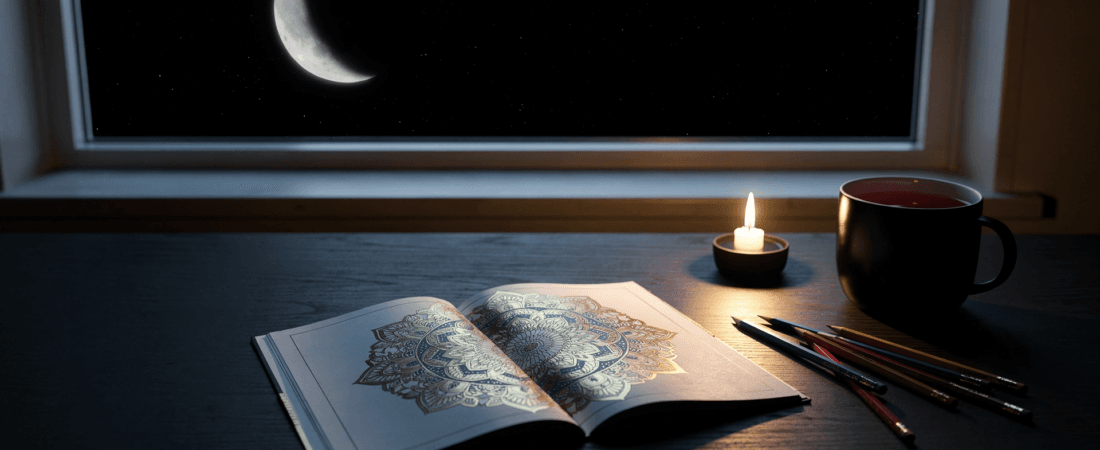
Coloring benefits go way beyond nostalgia. Coloring may help you feel calmer by giving your mind a gentle, structured task and pulling your attention into the present moment. Small studies have found that short coloring sessions can lower anxiety for many people. For a lot of people, it becomes a simple ritual that feels soothing, creative, and surprisingly effective when life gets loud.
If your body has been stuck in overdrive, pair this guide with our 5-Minute Nervous System Reset. Sometimes healing starts with something much simpler than people expect: a quiet page, a few colors, and a nervous system finally getting permission to exhale. 🎨
What Are the Main Coloring Benefits?
Quick Answer: Coloring benefits can include lower short-term anxiety, stress relief, better focus, and a break from racing thoughts. Small studies show brief coloring sessions can reduce anxiety for many people, likely because the repetitive movement, visual structure, and low-pressure creativity give your mind a calm, present-moment task.
How Coloring Benefits the Nervous System

Coloring gives your mind a structured, low-pressure task. Many people find that activities which feel rhythmic, predictable, and low-stakes help them settle. When you color, your attention shifts away from spiraling thoughts and toward shape, pattern, movement, and color choice.
Think of your nervous system like a home security system. When it is stuck on high alert, every small thing sets off the alarm: a notification, a tone of voice, a to-do list that looks at you funny. Calming activities do not rip the alarm out of the wall. They help it remember that not every noise is an intruder.
This kind of gentle focus may help interrupt stress loops. Instead of feeding mental overload, coloring offers a calm activity that invites you to slow down. Research has mostly measured short-term drops in anxiety rather than long-term nervous system changes, but as part of a routine, simple practices like this can help you feel more present.
Coloring Benefits for Stress Relief
One reason coloring feels so calming is that it redirects your attention into the present moment. Stress often drags the mind into the past or the future. Coloring gives the brain a softer assignment. Instead of replaying problems or predicting outcomes, you focus on what is directly in front of you: this shape, this color, this next little section.
That shift may seem small, but it can make a real difference. A coloring page creates a gentle structure without demanding perfection. You do not need to solve your whole life in that moment. You just choose the next section and keep going.
Why Adult Coloring Feels So Calming
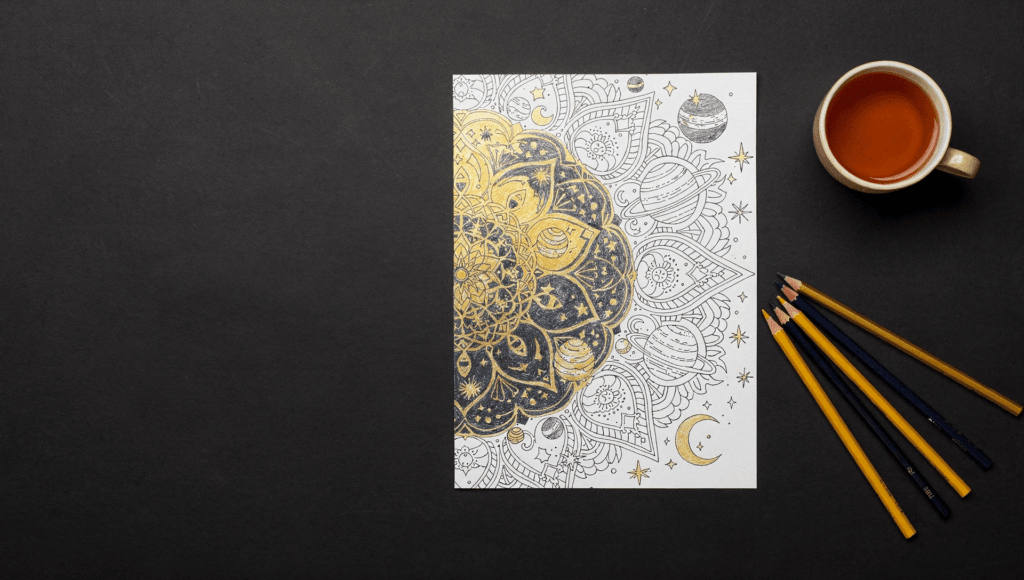
Adult coloring works because it combines creativity, repetition, and visual order. Coloring offers several things many people find calming, all at once:
- Predictable hand movement that settles into a steady rhythm
- Visual structure and order, since the lines are already drawn for you
- Creative control over something small and safe
- A satisfying sense of progress you can literally see filling in
- Zero stakes: nobody is grading your moon
For many people, that combination brings a subtle feeling of calm and control during stressful moments. If stress has also been leaving you scattered or energetically overwhelmed, our guide to grounding techniques for spiritual overwhelm can support you too.
Signs Your Nervous System Could Use a Coloring Break

Your body usually tells you it needs a reset long before your brain admits it. Watch for these everyday signals:
- You reread the same sentence three times and still don’t know what it said
- Your jaw is clenched or your shoulders are living somewhere near your ears
- You keep reaching for your phone without knowing what you are looking for
- Small noises feel extra loud or irritating
- You feel tired but wired at bedtime
None of these mean something is wrong with you. They are just your system asking for a downshift. Ten minutes with a coloring page is one of the gentlest ways to answer.
What Research Says About Coloring Benefits
This section is about science, not spirituality, so here is what the studies actually show.
Researchers have been testing coloring for years. In Curry and Kasser’s 2005 study in Art Therapy, college students who colored either a mandala or a plaid pattern after a stress-inducing task showed a greater drop in anxiety than students who drew freely on a blank page. Mandalas and plaid worked about the same, so the benefit seemed to come from structured coloring in general, not from the mandala shape itself.
More recently, a 2018 study published in Frontiers in Psychology ran two experiments. In the first, mandala coloring and free drawing lowered anxiety about equally. In the second, people who colored while a practitioner guided them with mindfulness instructions saw a bigger drop in anxiety than people who colored on their own. Overall mindfulness scores did not change, although participants who enjoyed the guidance reported feeling more mindful. The takeaway: intentional, guided coloring may ease anxiety a little more, especially if you like that approach.
These are small studies, and coloring is not a treatment for anxiety disorders. But the pattern is consistent and encouraging: short, structured, mindful coloring sessions may help many people feel calmer in the moment.
Coloring Benefits vs. Meditation: Which Is Better for You?
Coloring is not formal meditation, but many coloring benefits overlap with it because it creates a similar present-moment experience. For a lot of people, it is actually easier to start with. Here is how they compare:
- Meditation asks you to rest attention on breath or stillness. Powerful, but a racing mind can make it feel like trying to hold water in your hands.
- Coloring gives your attention something to do. That makes it a great “on-ramp” for anyone who says, “I can’t meditate, my brain won’t shut up.”
- Best of both: color for 10 minutes, then sit quietly for 2 minutes. Your mind is already slower, so the stillness lands softer.
Adult Coloring as a Calming Ritual
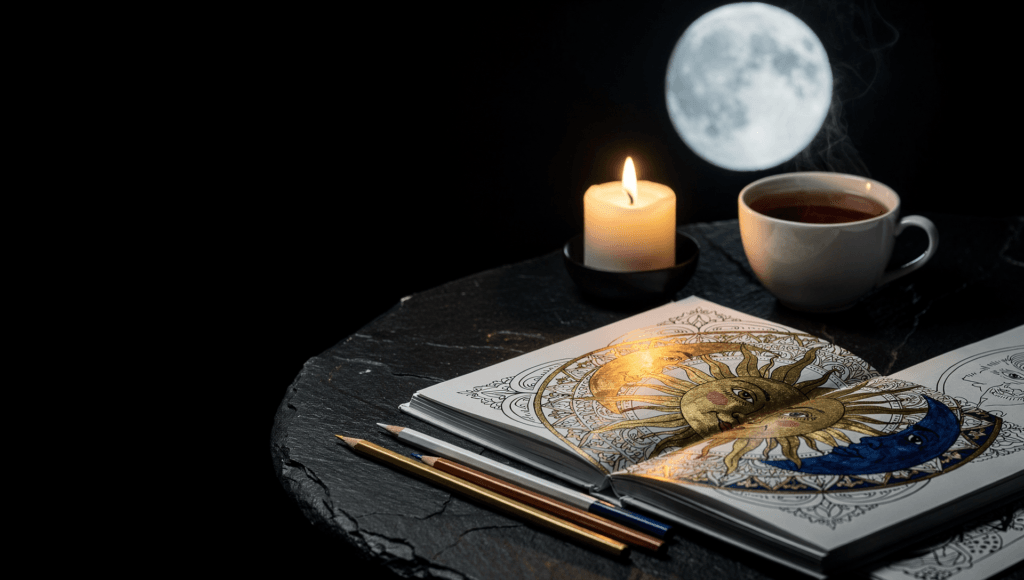
A lot of people think nervous system support has to be complicated. Sometimes it is not. Sometimes regulation begins with simple tools that help the body stop bracing. Coloring becomes a calming ritual when you use it intentionally. Try this 10-minute version:
- Put your phone in another room (yes, really) for 10 minutes.
- Take one slow breath in through your nose and a longer breath out through your mouth.
- Choose your first color based on how you want to feel, not how you feel right now.
- Color slowly without trying to be perfect. Notice the sound of the pencil and the pressure in your hand.
- Check in: are your shoulders, jaw, or breathing starting to soften?
- End by saying to yourself, My body is safe to slow down.
That tiny ritual turns coloring from a hobby into a calming wind-down habit. Do it a few evenings in a row and it can become a familiar cue: pencils out means it is time to slow down.
Coloring Tips to Maximize Coloring Benefits
- Pick simpler pages on hard days. Big shapes feel easier than tiny details when your brain is fried.
- Use a limited palette. Three to five colors cuts down on decisions, and fewer decisions means less mental load.
- Add calming sound. Soft lo-fi or ambient music can deepen the wind-down effect.
- Let “messy” be the point. Coloring outside the lines is allowed. Perfectionism is the opposite of regulation.
- Keep supplies visible. A pencil cup on the table is a quiet invitation your future self will thank you for.
Why Cosmic and Mandala Designs Hit Different
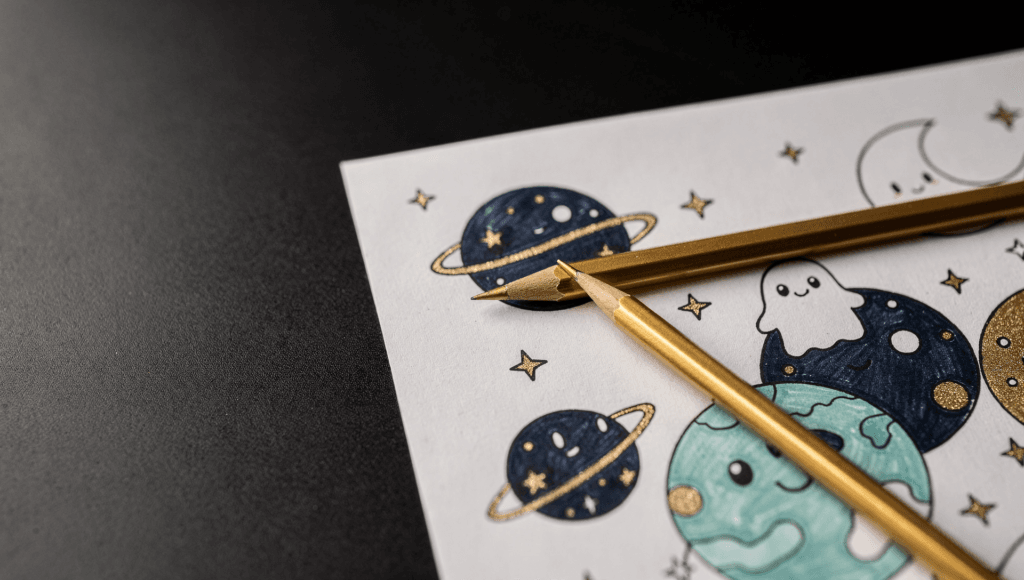
Not all coloring pages feel the same, and the design you choose can shape the coloring benefits you feel. Many people find mandalas and cosmic designs especially grounding. Research has not shown that mandalas work better than other structured patterns, but their circular, symmetrical shapes feel balanced and complete to a lot of colorers. Space scenes invite a feeling of awe, that “wow, the universe is big” feeling that helps everyday worries shrink back to their actual size.
That is exactly why our free calming coloring pages and the Cosmic Calm coloring book lean into this style: planets, moons, stars, and a few friendly spooky characters floating through space, designed to be soothing rather than stressful. No tiny impossible sections, no pressure. Just cozy cosmic calm.
Coloring as a Spiritual Practice
This section is history and spiritual tradition, not science.
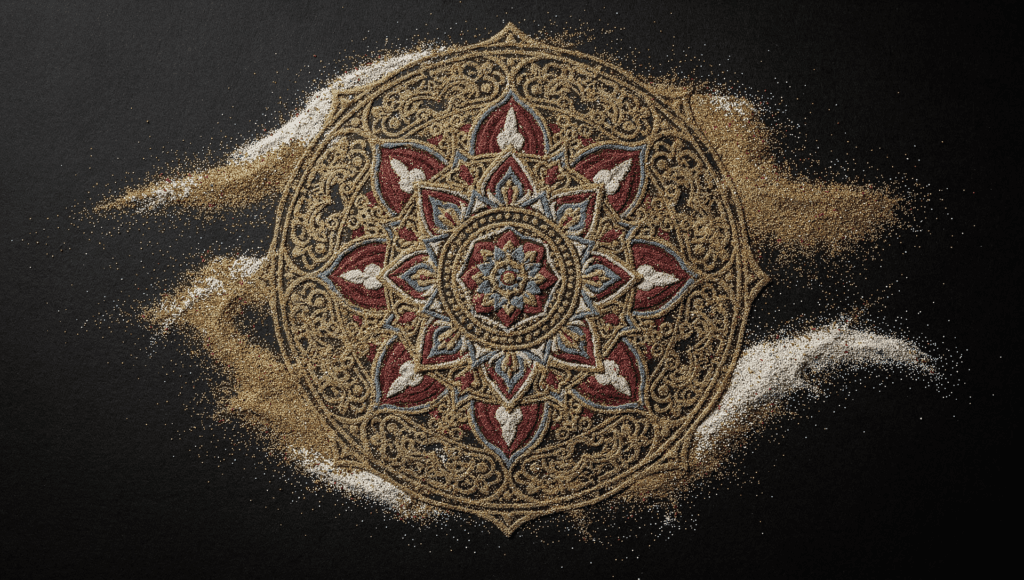
Long before adult coloring books hit bestseller lists, humans used sacred patterns to quiet the mind. Tibetan Buddhist monks spend days creating intricate sand mandalas grain by grain, then sweep them away as a lesson in impermanence. Hindu and Buddhist traditions use yantras and mandalas as visual focal points for meditation. The circle has always been a map of the cosmos and the self.
In the West, psychiatrist Carl Jung sketched a small circular drawing in his notebook nearly every morning for a period around 1918 and 1919. He came to see these mandalas as snapshots of his inner state, and later wrote about the mandala as a symbol of wholeness and the Self.
That is the deeper layer of coloring benefits: every page can be a tiny act of centering. When you color a mandala slowly and with intention, you are doing a gentle version of something people have practiced for centuries. Try setting an intention before you start, like “I release today’s tension” or “I welcome clarity,” and let each color hold that energy as you fill it in. Your coloring page becomes a small altar, and your pencil becomes a meditation tool. ✨
How to Choose a Coloring Page for Maximum Coloring Benefits
The page you pick shapes the experience more than most people realize. A few simple guidelines:
- Match complexity to your energy. On a drained day, choose big shapes and bold lines. When you have more focus, intricate mandalas and patterns can feel absorbing in a good way.
- Pick themes that feel safe and inviting. Nature, space, sacred geometry, and gentle characters tend to feel calmer than busy, chaotic scenes.
- Use paper that can handle your tools. Thin printer paper can pill or tear under heavy coloring, which is frustrating when you are trying to relax.
- Choose tools that feel good in your hand. Colored pencils give soft, controllable shading. Markers are bold and fast but can bleed through thin paper. Gel pens add shine for details.
There is no wrong choice, only what works for you tonight. Keep a few different styles on hand so you can match the page to your mood.
Common Coloring Mistakes That Kill the Calm
Coloring should feel like a release, not another task. Watch out for these habits that quietly undo the benefits:
- Chasing perfection. If you are stressed about staying inside the lines, the activity has turned into a performance. Let it be messy.
- Scrolling between sections. Picking up your phone every few minutes pulls your attention right back into overload.
- Choosing pages that are too complex. Tiny sections on a tired day can feel frustrating instead of soothing.
- Rushing to finish. The goal is the process, not a completed page. It is okay to color one small section and stop.
- Comparing your work online. Your page does not need to look like anyone else’s. This is for your nervous system, not your feed.
Best Times to Enjoy Coloring Benefits for Stress
You can feel coloring benefits at any time, but coloring can be especially helpful:
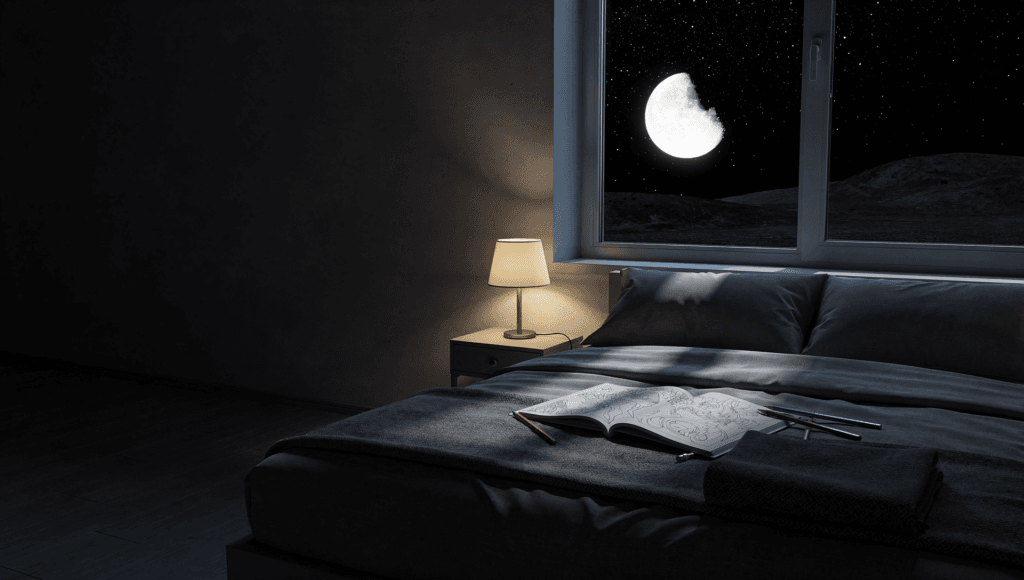
- in the evening to wind down before sleep
- after an emotionally heavy conversation or day
- before journaling or meditation
- during screen fatigue, when your eyes and brain need a non-glowing task
- on high-stress days when your mind needs a softer focus
- when you feel “off” and can’t name why (our guide to spiritual signs your energy is drained can help you decode that)
Coloring Benefits for Different Moments of Your Day
After Work
A short coloring session can act as a buffer between work mode and home mode. Ten minutes with a page, before you start dinner or scroll, gives your mind a clear signal that the workday is over.
Before Bed
Many people like coloring as part of a wind-down routine because it is a calm, screen-free activity. Pair it with dim, warm lighting and put your phone away, and it can become a gentle cue that it is time to rest.
With Kids, Partners, or Friends
Coloring does not have to be solo. Coloring side by side with a child, partner, or friend creates easy, low-pressure time together. Conversation flows more naturally when your hands are busy, and nobody has to perform.
On Heavy Days
When emotions feel big, try choosing colors that match how you feel first, then gradually shift toward colors that match how you want to feel. It is a simple, private way to move through a mood without having to put it into words.
A Soft Reset You Can Actually Stick With
If you have been trying to calm your stress, build gentler habits, or give your nervous system a break, coloring is one of the easiest places to begin. It is simple enough to do even when you feel drained, and effective enough to become part of a real routine.
Want to start today for free? Grab our free calming coloring pages and try the 10-minute ritual tonight. When you are ready for more, the Cosmic Calm coloring book gives you a whole book of calming cosmic pages, and the 30-Day Nervous System Reset Deck pairs beautifully with quiet coloring time if your body is calling for more structured daily support.
Coloring Benefits for Creativity and Manifestation
This section is spiritual perspective, not science.
At Code of Ascension, we see a calm nervous system as the foundation for clear intentions. When your body is braced for danger, it is hard to imagine a new future, let alone believe in it. Coloring offers a small window where the mind softens, and that softness is where creativity tends to wake up.
Try this: before you begin a page, write one intention in the margin, like “I am open to new opportunities” or “I trust my next step.” As you color, let the shapes fill in slowly, as if you are giving that intention color, texture, and life. When you finish, keep the page somewhere you will see it. It becomes a visual reminder of both the calm you felt and the future you are calling in. If manifestation is part of your practice, our guide to nervous system manifestation goes deeper on why feeling safe matters so much.
Final Thoughts
Coloring can help you feel calmer because it creates a moment of focus, rhythm, and pause, shifting your attention away from stress and back into the present. It is simple, but simple does not mean weak. Sometimes the softest tools are the ones we actually use.
So if life has been loud, consider this your sign to grab the colors, slow your breathing, and let your nervous system stop acting like it is being chased by invisible emails. A calmer body can change how you think, feel, create, and manifest. Keep Ascending. 🚀
FAQ
Why does coloring calm the nervous system?
Coloring may help you feel calmer by shifting attention into the present moment, giving your hands a steady rhythm, and offering a low-pressure structure. Studies mostly show short-term drops in anxiety rather than proven long-term nervous system changes.
What are the main coloring benefits for adults?
Common coloring benefits for adults include lower short-term anxiety, stress relief, better focus, a break from screens, creative expression, and an easy relaxation ritual you can repeat daily.
Is adult coloring a form of mindfulness?
It is not formal meditation, but it can feel similar. In a 2018 study, mindfulness-guided coloring lowered anxiety more than coloring alone, although overall mindfulness scores did not change.
Are mandalas better than free drawing for stress?
The evidence is mixed. A 2005 study found mandalas and plaid patterns lowered anxiety more than free drawing, while a 2018 study found mandala coloring and free drawing worked about equally. Choose whichever style you enjoy most.
How long should I color to feel calmer?
There is no proven ideal length, and the studies mentioned here looked at short, single sessions. Try starting with about 10 minutes and adjust to whatever feels good for you.
When is the best time to color for relaxation?
Evenings, stressful afternoons, after emotional overload, or before journaling and meditation are all great times to color.
Is coloring enough by itself?
Coloring can be a helpful support tool, but it is not a replacement for professional care. If you are dealing with severe anxiety, trauma, or ongoing mental health concerns, please reach out to a qualified professional.
Is coloring good to do before bed?
For many people, yes. Coloring is a calm, screen-free activity that can fit well into a wind-down routine, especially with dim, warm lighting and your phone out of reach.
Are colored pencils or markers better for relaxation?
Colored pencils usually feel more relaxing because they are slower and easier to control. Markers are fast and bold but can bleed and feel less forgiving. Use whatever feels best to you.
About The Author
Author: King | Founder of Code of Ascension
King is the founder of Code of Ascension, a spiritual education platform focused on consciousness, symbolism, manifestation, nervous system awareness, and hidden patterns of reality. Through Code of Ascension, he explores ancient wisdom and modern insights to help others awaken, align, and ascend.
Keep Ascending 🚀