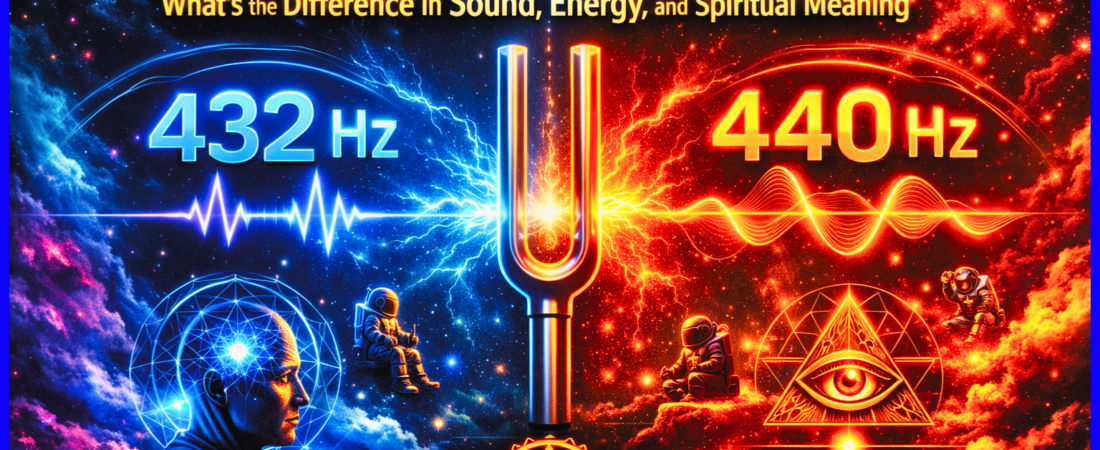

432 Vs 440 is one of those spiritual topics that pulls people in because it feels simple at first and much larger once you sit with it. This guide gives the subject a fuller Code of Ascension treatment: the direct meaning, the symbolism, the emotional lesson, the shadow side, the money and love implications, and the grounded way to work with the idea without sliding into fear or fantasy.
If you are the seeker who feels music in the body and wants discernment without fear-based frequency claims, start here: 432 vs 440 is not something to worship, panic over, or turn into a rigid belief system. It is a symbolic language. It gives the mind an image for sound, resonance, nervous system response, intention, tuning, and the way vibration can influence mood and attention. When you approach it from a regulated state, the symbol becomes less of a mystery to chase and more of a mirror for what consciousness is ready to understand.
Fast Answer: What 432 Vs 440 Means
The fast answer is that 432 vs 440 points to sound, resonance, nervous system response, intention, tuning, and the way vibration can influence mood and attention. Spiritually, it asks you to look at pattern rather than surface appearance. It can reveal where your energy is coherent, where old programming is shaping your choices, and where you are being invited to mature. The symbol is not the whole truth by itself. It is a doorway into discernment.
A grounded reading of 432 vs 440 keeps two things true at once. First, mystical symbols can carry real emotional and spiritual charge. Second, that charge should not override your body, your common sense, or your ability to test what is actually happening. Code of Ascension treats symbolic work as a way to become clearer, not a way to become more afraid.
What Is 432 Vs 440?
At the simplest level, 432 vs 440 is a spiritual and symbolic topic built around the frequency contrast. People search for it because the image or idea feels meaningful. It can show up in art, meditation, music, dreams, architecture, spiritual study, synchronicity, or a sudden inner pull toward a symbol you cannot quite explain.
What matters is not only the object itself. What matters is the relationship between the symbol and your consciousness. When 432 vs 440 appears repeatedly, it may be asking you to slow down and notice the pattern beneath the pattern. Are you being shown structure? Harmony? Pressure? Creation? Resonance? Control? Protection? The answer depends on the topic, the moment, and your state.
The mature approach is to begin with observation. Do not rush into the most dramatic interpretation. Notice what the symbol evokes in your body. Notice whether it brings calm, curiosity, tension, fear, recognition, grief, or clarity. That first response is part of the meaning, because symbols often touch the places where language has not caught up yet.
432 Vs 440 Spiritual Meaning
The spiritual meaning of 432 vs 440 begins with sound, resonance, nervous system response, intention, tuning, and the way vibration can influence mood and attention. This is the layer most readers are searching for: not only what the topic is, but what it may be trying to show them about life, energy, consciousness, and awakening. Spiritually, the symbol becomes a teaching device. It takes something subtle and gives it a shape you can contemplate.
When you work with 432 vs 440, the deeper question is not ‘What secret fact does this prove?’ The better question is ‘What pattern is this showing me?’ That shift matters. It keeps the interpretation grounded. It also protects you from outsourcing your spiritual authority to an image, a frequency, a teacher, or a theory.
Used wisely, 432 vs 440 helps you recognize the difference between a living symbol and a fixed superstition. A living symbol opens awareness. A superstition closes it. A living symbol helps you become more honest. A superstition makes you more reactive. The goal is not to collect mystical information. The goal is to become more awake inside your own life.
The Symbolism Behind 432 Vs 440
The symbolism behind 432 vs 440 works because the psyche understands pattern before it understands explanation. Shapes, sounds, numbers, colors, and repeated images can speak directly to the imagination. That does not mean every interpretation is literally true. It means symbols are a bridge between the visible and the invisible.
For grounded reference, the ISO 16 tuning standard is useful because it anchors part of this discussion in a real-world source instead of leaving everything floating in speculation. Code of Ascension is comfortable with mystery, but mystery becomes stronger when it is not pretending to be proof. The best spiritual writing gives the reader both wonder and discernment.
Symbolically, 432 vs 440 can be read through the lens of attention. What does it make you notice? What part of your life does it illuminate? If the symbol points to order, where are you being invited to organize? If it points to resonance, where are you being invited to listen? If it points to structure, where are you being invited to rebuild? Meaning becomes practical when it changes how you meet yourself.
432 Vs 440 And Consciousness
432 Vs 440 becomes most powerful when you treat it as a consciousness mirror. The symbol does not replace your intuition; it trains it. It gives your awareness a focal point so you can notice what rises from beneath the surface. Sometimes that is peace. Sometimes it is resistance. Sometimes it is a memory, a question, or a sudden understanding of a pattern you have been living inside for years.
This is why spiritual symbols should be handled with respect but not fear. The mind loves extremes. It wants a symbol to be either perfectly holy or secretly dangerous. Consciousness is usually subtler than that. A symbol can hold beauty and warning, order and pressure, inspiration and shadow. Your task is to read the layer that is actually present, not the layer that creates the biggest emotional spike.
When 432 vs 440 appears during an awakening season, it may be showing you where your perception is sharpening. You may notice connections faster. You may feel more sensitive to images, sounds, dreams, numbers, or repeated themes. The key is to stay embodied. Spiritual perception should make your life clearer, not more scattered.
The Shadow Lesson Of 432 Vs 440
The shadow lesson of 432 vs 440 is outsourcing your discernment to frequency claims, believing one tuning is automatically holy, or using sound as an escape from embodiment. This is the part people often skip because the beautiful or mysterious layer feels more exciting. But shadow is where the symbol becomes useful. It asks where you are projecting, avoiding, fearing, obeying, romanticizing, or giving your power away.
Every symbol has a distorted version. The distorted version of 432 vs 440 appears when the idea becomes a way to bypass responsibility. You may use the symbol to explain everything while changing nothing. You may use it to feel chosen, threatened, superior, doomed, or spiritually special. None of those states create real integration.
The higher lesson is better listening, calmer awareness, energetic sensitivity, and the ability to choose music by how it actually affects your body. That is the difference between symbolic curiosity and spiritual maturity. Curiosity asks, ‘What does this mean?’ Maturity asks, ‘How should I live differently now that I see this pattern?’ When the symbol leads to more honesty, better boundaries, clearer choices, and deeper compassion, it is doing its work.
432 Vs 440 In Money And Career

In money and career, 432 vs 440 points to creative flow, focus music, work rhythm, emotional tone, and the sound environment that supports disciplined output. This does not mean every financial event has a hidden spiritual code. It means your work life has patterns, and spiritual symbolism can help you see them. Where do you repeat the same cycle? Where do you overgive? Where do you hide? Where do you confuse pressure with purpose?
A healthy money reading of 432 Hz and 440 Hz stays practical. It asks what structure, rhythm, environment, skill, or belief needs to change. If the symbol brings up scarcity, notice it. If it brings up ambition, notice that too. Money is not separate from consciousness. It reveals receiving capacity, self-worth, discipline, visibility, and the way you relate to the material world.
The career gift of the tuning debate is not escapism. It is alignment. You are not meant to abandon the physical world because a symbol feels mystical. You are meant to bring more consciousness into calendars, offers, decisions, conversations, pricing, study, creativity, and follow-through. Spirit becomes real when it can shape the systems you live through.
432 Vs 440 In Love And Relationships

In love and relationships, the sound comparison points to shared atmosphere, nervous system co-regulation, emotional openness, and the way music can soften or sharpen the field between people. Relationships are pattern fields. They show where your nervous system feels safe, where your wounds still negotiate for control, where your heart opens, and where old roles keep repeating. A symbol can help you name what the relationship is teaching without turning the other person into a prophecy.
The love lesson of 432 Hz and 440 Hz is discernment. If the symbol makes you think about a person, ask what quality is being highlighted. Is it harmony, pressure, longing, projection, truth, avoidance, devotion, or fear? Spiritual meaning should not override direct communication. It should help you communicate with more honesty.
Healthy love can hold mystery, but it also needs clarity. It needs agreements, respect, timing, boundaries, and emotional responsibility. If a spiritual symbol becomes an excuse to ignore obvious behavior, pause. The real sign is not only what appears in meditation. It is how love behaves in daily life.
Common Misconceptions About The Tuning Debate
The first misconception is that this frequency contrast has one fixed meaning in every situation. Symbols are not flat. They shift by context, culture, personal history, and spiritual timing. A symbol can be sacred in one setting, psychological in another, artistic in another, and emotionally personal in another.
The second misconception is that the most intense interpretation must be the truest one. Intensity is not the same as truth. Sometimes intensity is your nervous system reacting to uncertainty, authority, memory, or fear. A grounded interpretation should leave you clearer, not trapped in a loop.
The third misconception is that the sound comparison can do the inner work for you. It cannot. A symbol can focus attention, open reflection, and mirror a pattern, but you still have to embody the lesson. You still have to make the call, set the boundary, rest, study, forgive, build, release, or tell the truth.
Nervous System Grounding For 432 Vs 440
The nervous system matters because the tuning debate can stir strong reactions. If you feel panic, urgency, obsession, or a sudden need to research for hours, pause. That reaction does not automatically mean the symbol is dangerous or powerful. It may mean your body is responding to uncertainty.
Grounding brings the interpretation back into the present moment. Feel your feet. Look around the room. Name five ordinary objects. Let your shoulders drop. Ask what is actually happening right now. Once your body feels safer, return to the symbol. You will usually read it with more nuance.
Code of Ascension work is not about feeding fear loops. It is about turning spiritual intensity into clarity. If this frequency contrast makes you more embodied, more honest, more compassionate, and more responsible, the symbol is supporting awakening. If it makes you frantic, superior, or disconnected, the next step is grounding before interpretation.
A Simple Practice For The Sound Comparison
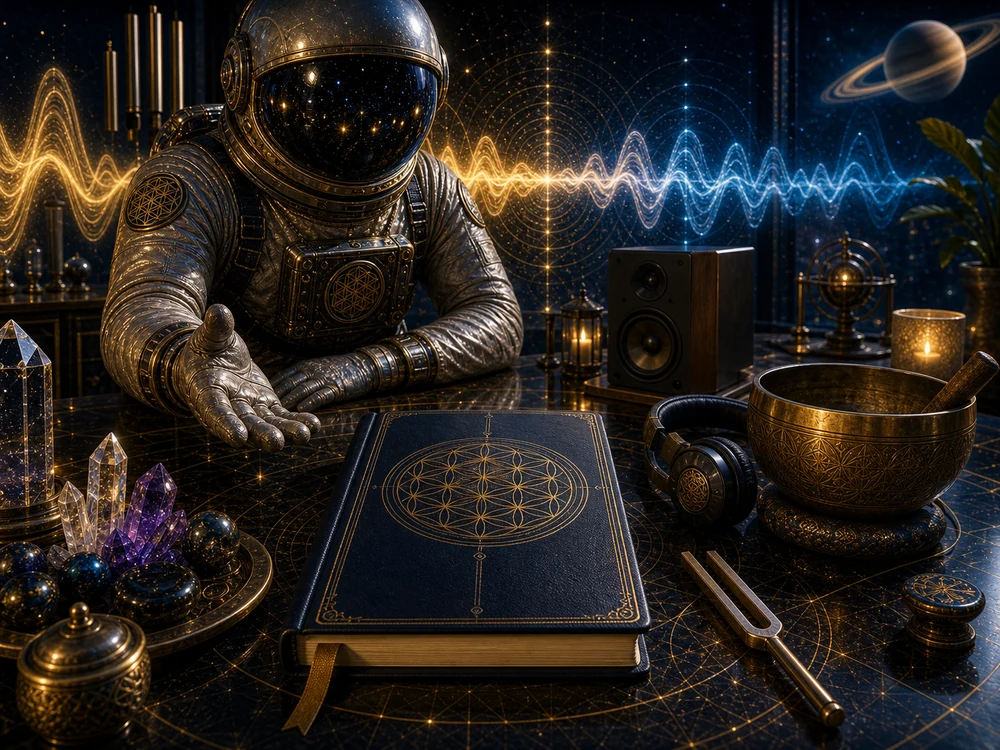
Use this simple practice with 432 Hz and 440 Hz: sit quietly for three minutes, bring the symbol or idea to mind, and ask three questions. What pattern is being shown? Where does this pattern appear in my life? What is one grounded action that would honor the lesson without exaggerating it?
Write the answers without trying to sound spiritual. Plain language is powerful. If the answer is ‘I need rest,’ let it be rest. If the answer is ‘I need better boundaries,’ let it be boundaries. If the answer is ‘I am projecting,’ let that be enough. The symbol is not asking for performance. It is asking for honesty.
Then choose one small action. Do not try to transform your whole life in one sitting. Change the next choice. Clean the space. Send the message. Update the plan. Take the walk. Close the laptop. Practice becomes integration when the tuning debate leaves the page and enters your behavior.
Journal Prompts For This Frequency Contrast
Use these prompts when the sound comparison keeps appearing in your awareness. What does this symbol make me feel before I explain it? What part of my life carries the same pattern? Where am I making the meaning too dramatic? Where am I dismissing something real because it feels inconvenient?
You can also ask: What would this symbol look like as a boundary? What would it look like as a creative decision? What would it look like in my home, my money, my relationships, or my spiritual practice? What lesson keeps repeating until I meet it with maturity?
The purpose of journaling is not to force a perfect answer. It is to let the unconscious speak in a grounded way. If you come away with one clear sentence, that is enough. One honest sentence can shift more than twenty pages of mystical overthinking.
Related Code Of Ascension Guides
To keep studying this topic, explore Nikola Tesla 369 Meaning, 369 Method Explained, Pineal Gland Activation. These links connect 432 Hz and 440 Hz to the wider Code of Ascension map without inventing new paths or forcing unrelated funnels.
Use this article as a listening guide, then explore Nikola Tesla 369 for a deeper Code of Ascension view of number, frequency, and manifestation.
FAQ About The Tuning Debate

What is the difference between these tuning frequencies?
The difference between these tuning frequencies is tuning. In 440 Hz tuning, the note A above middle C is set to 440 cycles per second. In 432 Hz tuning, that same A is lowered to 432 cycles per second. Spiritually, many listeners describe 432 Hz as softer or calmer, but personal response matters.
Is 432 Hz better than 440 Hz spiritually?
432 Hz is not automatically better than 440 Hz for everyone. Some people feel 432 Hz is warmer, calmer, or more natural, while others notice little difference. A grounded listening approach is to listen with your body, notice your nervous system, and avoid fear-based claims.
Why is 440 Hz the standard tuning?
440 Hz became widely used as a standard concert pitch through modern tuning conventions and formal standards. It helps musicians tune together across instruments and performances. The spiritual debate around the tuning debate is separate from the practical reason a shared standard exists.
Does 432 Hz heal the body?
There is no need to claim that 432 Hz automatically heals the body. Sound can affect mood, breath, focus, and emotional state, which may support relaxation for some people. In Code of Ascension terms, this frequency contrast is best approached through resonance, nervous system awareness, and personal discernment.
Can 440 Hz be harmful?
440 Hz should not be treated as automatically harmful. Many beautiful, moving, and spiritually meaningful pieces of music use standard tuning. If a song feels harsh to you, the cause may be volume, rhythm, lyrics, memory, stress, or production style, not only the tuning frequency.
How can I test these frequencies for myself?
To test 432 Hz and 440 Hz, listen to the same simple piece in both tunings at the same volume. Notice breath, jaw tension, emotions, focus, and body response. Do not force a conclusion. The goal is not to prove a theory but to learn how your system receives sound.
What does the tuning debate mean for manifestation?
For manifestation, this frequency contrast is about state and coherence. Music can help you regulate, focus, visualize, or feel emotionally available to your desire. The tuning alone does not manifest for you. Your nervous system, belief, repetition, and aligned action still matter.
What should I read after this frequency guide?
After this frequency guide, read Nikola Tesla 369 Meaning, 369 Method Explained, and Pineal Gland Activation. These related Code of Ascension guides connect frequency, numbers, intuition, manifestation, and consciousness in a grounded way.
Final Thoughts On The Tuning Debate
this frequency contrast is not the end of the path. It is an invitation to read your life with more awareness. If the topic brings beauty, let it open you. If it brings discomfort, let it teach you. If it brings questions, let those questions become grounded practice instead of endless mental noise.
The deeper gift of the sound comparison is that it turns attention into initiation. You begin by asking what a symbol means. You end by seeing where that meaning already lives in your choices, your relationships, your body, your work, and your spiritual rhythm.
About The Author
Author: King | Founder of Code of Ascension
King is the founder of Code of Ascension, a spiritual education platform focused on consciousness, symbolism, manifestation, nervous system awareness, and hidden patterns of reality. Through Code of Ascension, he explores ancient wisdom and modern insights to help others awaken, align, and ascend.
Keep Ascending 🚀